

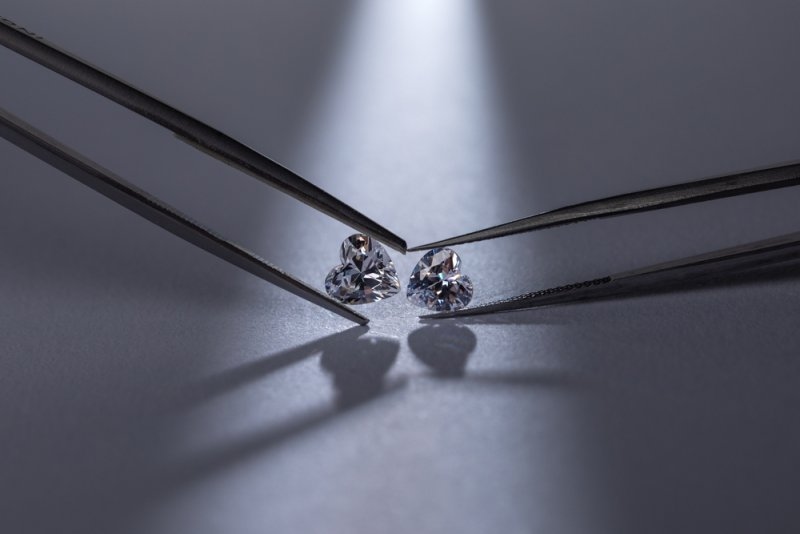
Information about the value of diamonds allows consumers to shop without reservation when purchasing any engagement rings, as gifts, or even as an investment. You will have a tremendous challenge comparing lab-grown diamonds vs natural diamonds because both options appear identical.
All of the lab diamonds are exactly the same as bright as they make organic ones, and these also offer you equivalent firmness and are available in the exact cuts and sizes. But natural as well as created diamonds include distinctions when it comes to the origin, source, value, and then, cost comparison. Always educate yourself prior to deciding to try to get any selection of investment.
The debate between lab-grown and natural diamonds has grown in recent years as lab-produced stones are easily accessible. They may look similar, and both have the same crystal structure and hardness, but they are created in two different ways. A natural diamond is formed deep in the earth over billions of years, whereas a lab-grown diamond is created through the use of sophisticated technology.
A full diamond comparison needs to include not just visual aspects. At a minimum, include diamond quality, diamond value, price differences, environmental costs, and future resale. Doing so will give you a result that best suits you, as both options have tradeoffs.
Natural diamonds are formed under immense heat and pressure deep in the earth. It takes billions of years for natural diamonds to be formed before the volcano pushes them to the surface to be mined.
Lab-grown diamonds are created in a laboratory setting, using techniques that mimic the natural formation of diamonds. Most expert gemologists require equipment to tell the difference between a natural and a lab-grown diamond.
Across the board, from visual to scientific, the quality of a diamond is about the same for both. This is a key component in any diamond comparison.
Many buyers argue that natural diamonds are more beautiful and better, but this is not true. Both natural and grown diamonds are graded by the Four C's:
When comparing the qualities of diamonds, these grading factors are much more significant than a diamond's origin. It is very easy for a premium lab-grown diamond to surpass a lesser-quality natural stone.
Therefore, this is why the experts who compare diamonds tell you to use Certified Grading Reports, rather than assumptions.
Cost is another major factor that causes buyers to go for lab-grown vs. natural diamonds. This is partly due to the fact that natural diamonds are a rarity and therefore higher in market value. It is often possible to buy a lab-grown diamond that is also 30%-70% cheaper than a natural diamond with the same shape and grades.
This means a larger stone or a better quality diamond can be bought for the same budget. However, lower prices don't have a sustainable long-term value to the diamond, especially when resale is important.
Know your diamond values first. Natural diamonds tend to hold a higher value because of their scarcity and demand. They may not be a sure investment, but they tend to resell for a higher value than a lab-grown diamond.
As the process of creation becomes more refined, lab-created diamonds will keep becoming cheaper. As availability continues to increase, resale values for diamonds tend to be lower.
If you do care about maintaining Diamond value, this deserves serious attention when comparing diamonds.
Several reasons exist for which a number of buyers select ethical diamonds. One of these reasons, of course, is the desire for the purchase to reflect their values.
Instead of presuming that choosing one of the two options is always best, find out about the seller's sourcing method first.
It comes in at a 10 on the Mohs scale for both natural and man-made diamonds. They have a hardness of 10, which is the highest score, and gives both man-made and natural a good rating of daily wear durability.
When choosing an engagement ring, earrings, or pendant, the quality of hardness is pretty much the same, and a win-win, whether a man-made diamond.
You should not judge a lab-made and a natural Diamond, their durability will be so similar when comparing strength.
Each buyer will value these elements in a different way.
Natural diamonds may suit buyers who value:
Ask not which gem is better, but which fits your requirements better. For those who are most concerned about price and size, lab-grown diamonds will appeal the most. For those who are more concerned with rarity, resale value, and true diamond value, natural diamonds will be the better investment.
Always buy certified diamonds from established jewelers and check grading reports carefully. Certification provides assurance of the quality of any natural or lab-produced diamond.
Deciding which diamond is best, lab-grown vs natural diamonds, is not as simple as selecting an outright winner. Both lab-grown and natural diamonds are stunning, resilient, and radiant, so ultimately your choice will be down to what is most suitable for you: your budget, your values, the value of the stone, and your future plans.
With a little guidance on buying diamonds, diamond comparison, diamond quality, and ethical diamonds, you can determine the right choice for you.
Yes, they are all actual diamonds because they consist of the same hard material (all lab-grown diamonds contain real material in any case, with the exception of synthetic stone), having the same hardness and crystal composition as nature-born diamonds; they only differ in the way in which they are created.
Certified labs follow the same grading criteria as those that grade natural diamonds when looking for cuts, clarity, color, and carat weights.
Most jewelers cannot even distinguish the difference with only their eyes. You typically need specialized equipment to know the origin of a particular diamond. Natural and lab-grown diamonds are practically the exact same, so you need professional testing during a diamond comparison.
Both types work great. Buyers typically select lab-grown diamonds so they can get a big rock as affordably as possible, while those who seek rarity, value, and heritage decide on a natural diamond. Neither choice is superior in its appeal.
This choice falls back on personal desire for a diamond, too. Natural diamonds grow naturally at a extremely rate on the planet earth, where it simply took many years to create to enable to extract from the ground, on the other hand, some of you want your stone for many many years, natural or Lab Created; this particular a long lasting commitment that you can consider making using our finest choice for all-inclusive luxury that satisfies any preference in mind.
This content was created by AI